
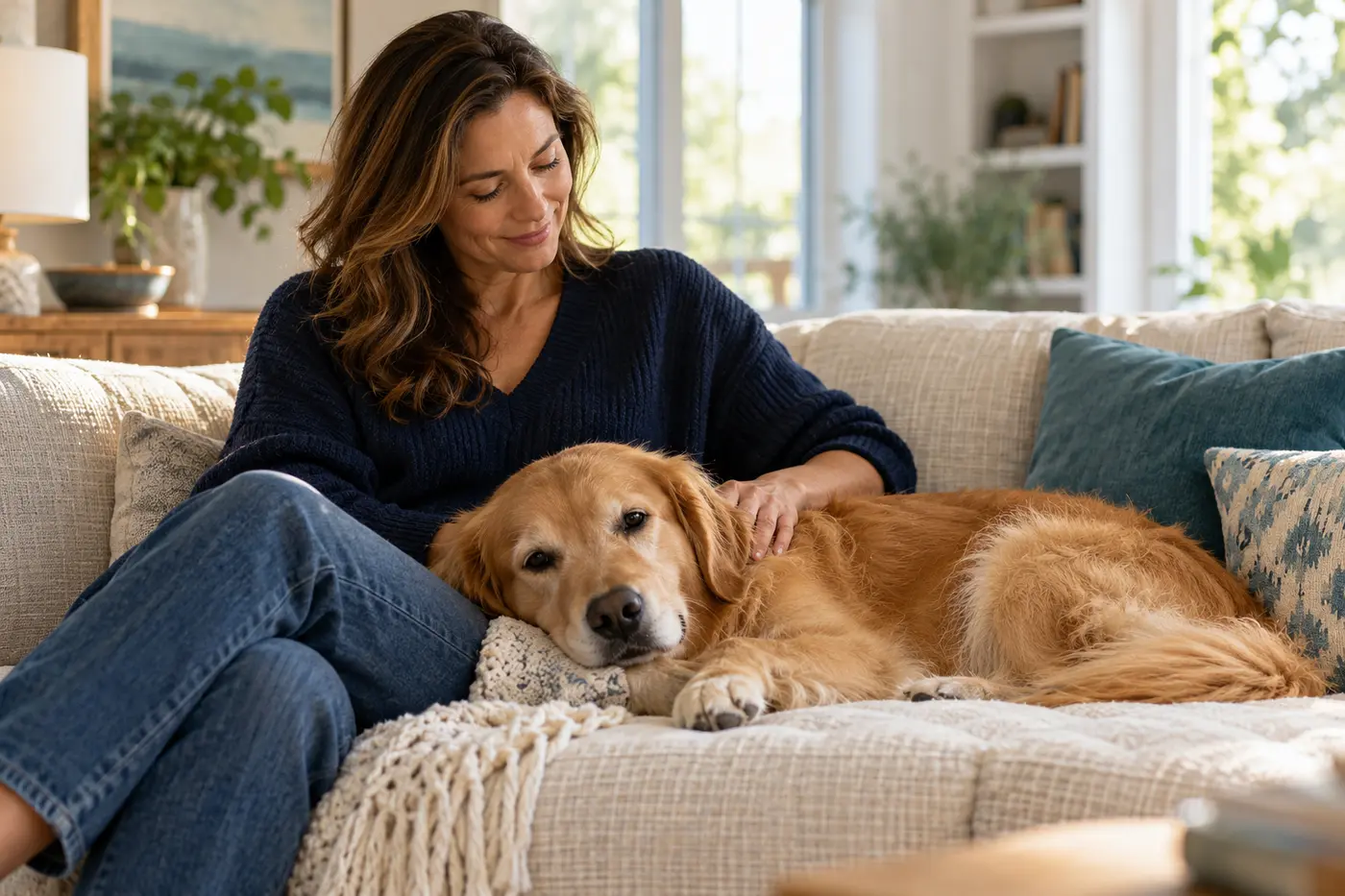
The caregiver's role
Animals cannot describe their experience in words, so the caregiver provides context and observes behavior. Before a session, record a simple baseline rather than relying on memory.
Useful observations include appetite, water intake, sleep location, ease of movement, social interaction, vocalizing, grooming, elimination habits, and responses to familiar situations. Note what is normal for that individual animal.
Choose one focus
Examples might include settling after a household change, sensitivity around a routine, emotional support during recovery, or general comfort. Energy work is complementary and should not be used to determine the cause of symptoms.
During a remote session
Your animal may sleep, move around, leave the room, seek contact, or behave normally. Do not restrain an animal to create a particular response. The practitioner can explain what participation is needed from you and how the session will be documented.
Afterward
Observe the same baseline categories for several days. Record specific behavior: “slept in usual bed for six hours” is more useful than “seemed better.” Avoid changing several parts of the animal's routine at once if you want to understand what changed.
Veterinary care comes first
New symptoms, pain, breathing changes, appetite loss, injury, sudden behavior changes, or other health concerns require a veterinarian. Energy work does not diagnose, treat, or cure veterinary conditions and should never delay urgent care.
The best caregiver record is calm, specific, and honest about uncertainty. It supports clearer communication with both the practitioner and the veterinary team while keeping the animal's welfare at the center.